
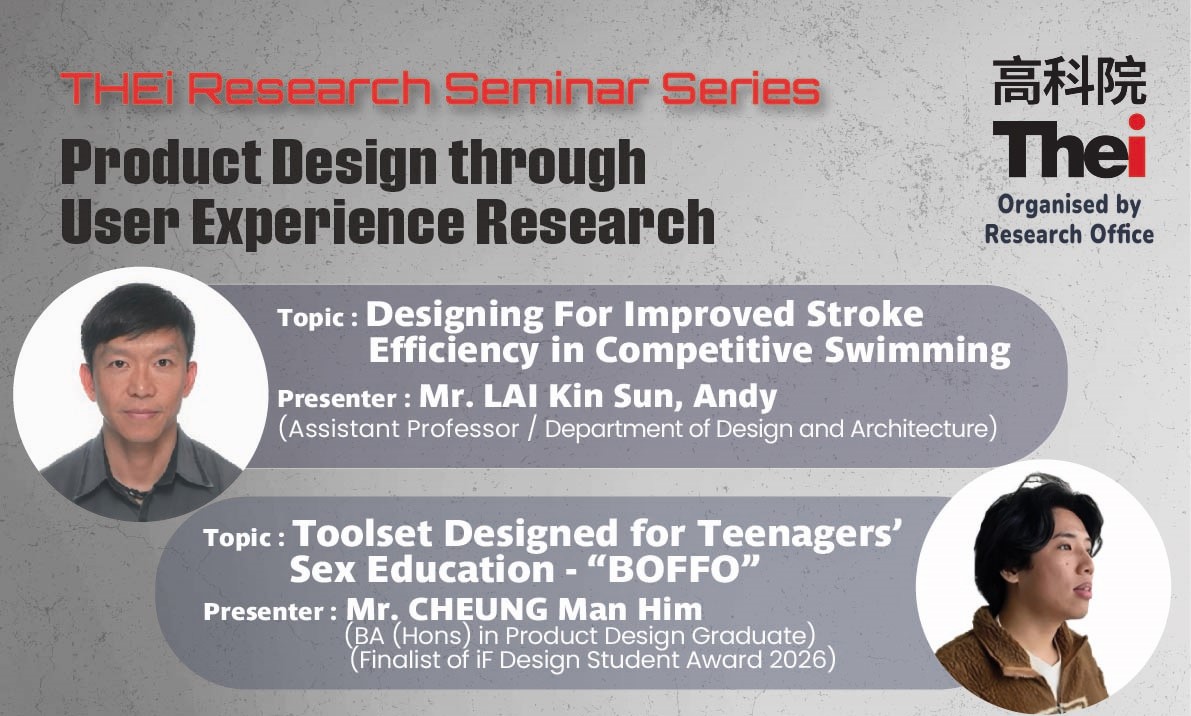
The seminar presented a practical, evidence-driven framework for product design that systematically integrates user experience (UX) research with design thinking. The approach is structured to uncover latent user needs, mitigate development risks, and deliver solutions that are usable, desirable, and technically feasible. It operationalizes the design thinking process by embedding generative research methods—such as contextual inquiry, interviews, and diary studies—within the empathize and define phases to build a foundational understanding of user behaviors and constraints. Insights are then synthesized into shared artifacts like personas, journey maps, and
opportunity maps to align cross-functional teams and focus ideation.
The framework further guides structured ideation through co-creation workshops and divergence–convergence cycles, followed by rapid prototyping at increasing fidelity. Each prototype undergoes iterative evaluative testing using methods ranging from usability studies and remote testing to product analytics and lightweight experiments, ensuring continuous learning and refinement from concept to launch. Applied in varied contexts, this integrated method has demonstrated measurable improvements in task success rates, reduction in rework, accelerated learning cycles, and stronger outcomes in team alignment and product accessibility.
The seminar presented two design research projects that apply human-centered methods to enhance performance and learning in distinct domains. The first project, supported by a THEi Seed Grant, was present by Mr Andy Lai, which explored design interventions for improving stroke efficiency in competitive swimming. Integrating insights from biomechanics and coaching practice, the project employed motion analysis, iterative prototyping, and athlete feedback to inform training aids and feedback interfaces aimed at optimizing propulsion and reducing drag. The session outlined the research rationale, design process, and evaluation framework, highlighting how evidence-informed design can
translate into more effective, coachable training routines.
The second presentation, presented by Mr Cheung Man Him, a BA(Hons) Product Design graduate, introduced “BOFFO”, a modular toolset designed to support inclusive, age-appropriate sex education. The design was shortlisted in the iF Design Student Award 2026. Developed through co-creation with educators and learners, BOFFO emphasizes clarity, accessibility, and cultural sensitivity, using tactile components and scenario-based activities to foster engagement and comprehension. The talk covered the design principles, prototyping cycles, and implementation considerations that guided the
toolset’s development.
Together, the presentations underscore how design research can bridge theory and practice—advancing athletic performance and educational outcomes—while offering transferable methods for needs assessment, rapid prototyping, and stakeholder-led evaluation relevant to designers, coaches, educators, and healthcare professionals.
鸣谢
The projects were supported by THEi Seed Grant Scheme (Project No.: SG2425105), Specialife Industries Limited and The Family Planning Association of Hong Kong.