
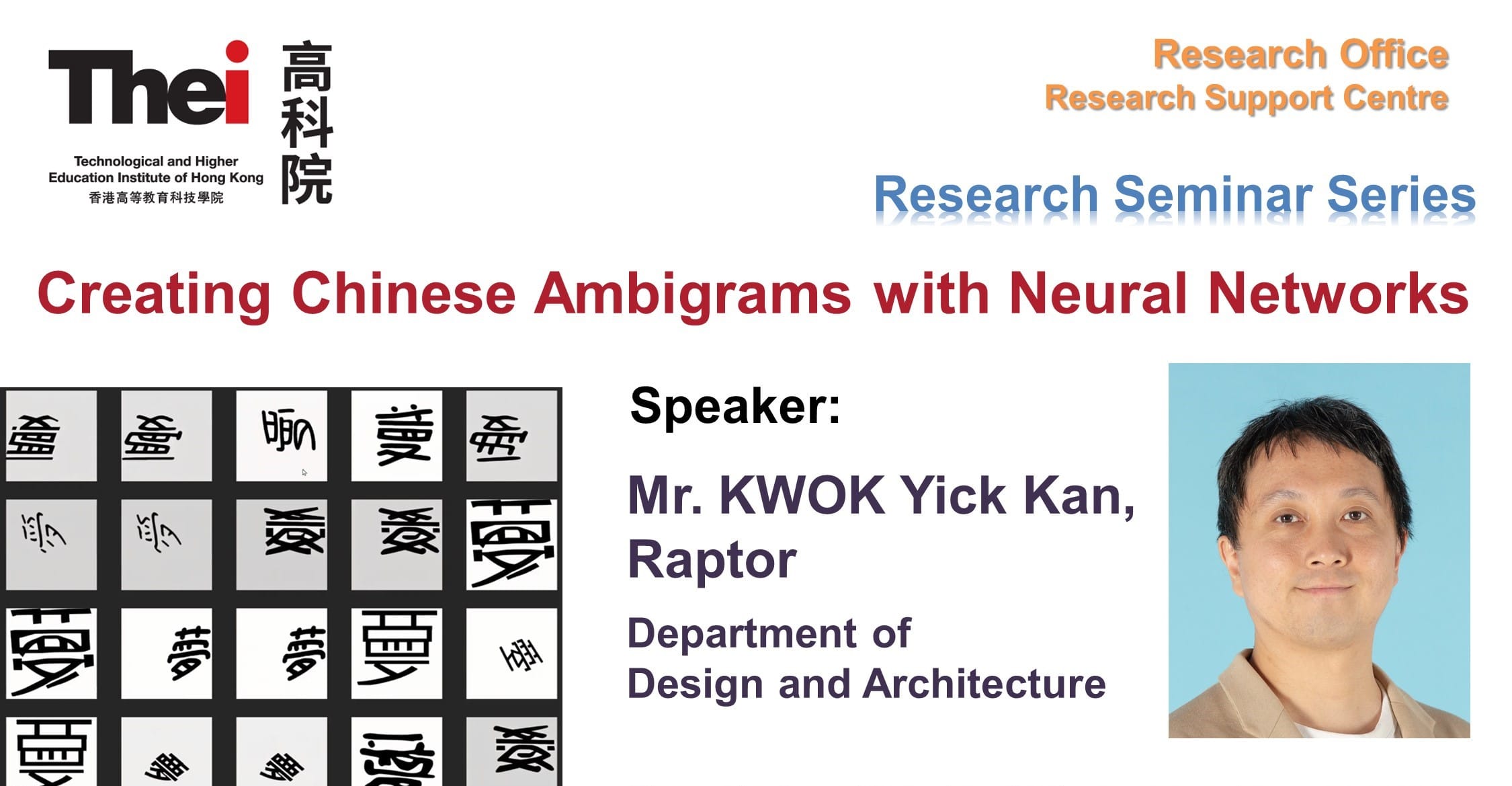
Focus and Design
The focus of the project is to find a way to generate ambigram automatically using deep neural network.
The design of our approach is to make use of Stable Diffusion model to generate potential Ambigram patterns. We created a LoRA model for each Chinese character to import to Stable Diffusion model for training. Then, we use classifier to rank the results and find out the pattern which looks most alike an Ambigram.
Objectives
1.To assist artists to generate ambigrams
2.To enlarge the scope of AI-driven applications in advertising and marketing
3.To provide researchers a deeper understanding of the usefulness and limits of deep learning in extracting Chinese characters features used in ambigrams
Results
Stable Diffusion is proven an effective way to generate ambigram patterns for Chinese characters. We created a production pipeline to generate Ambigram patterns from any two selected Chinese characters.
Significance of Findings
- Able to generate LoRA model of Chinese characters with various font variations
- Stable Diffusion is able to create Chinese Ambigram patterns
- Our classifiers can detect valid and possible Ambigram patterns for artists as a starting point of their artwork creation.
Detailed Findings
Here are the detailed findings of our Seed Grant research project. Through our research process, we found out that Stable Diffusion platform is a more appropriate platform to generate ambigram patterns rather than traditional deep learning neural network such as GAN and WGAN.
We first generate our training dataset using 50 Chinese TrueType fonts (TTF), and then train the LoRA model generation script via Kohya’s GUI (https://github.com/bmaltais/kohya_ss) and Dataset Generator created by our RA. Then we use Stable Diffusion to generate possible ambigram patterns; each pattern is a JPEG image.
After generated batches of images, we use our custom Classifier logic to identify and rank the generated images according to the likeliness of the original characters. For the highest rank entries, we will treat them as successful generated ambigram patterns.