
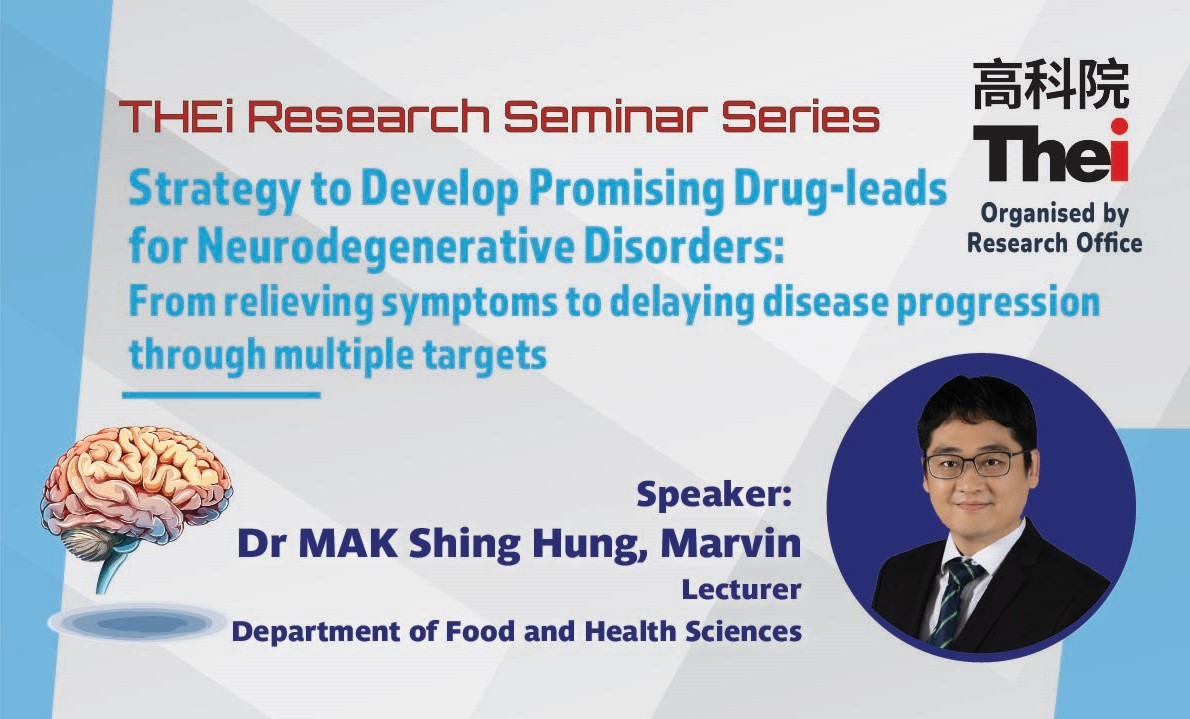
Neurodegenerative diseases, including Alzheimer’s disease (AD) and Parkinson’s disease (PD) are characterized by dysfunctions of cognitive functions and/or motor system. The current clinically available drugs only offer limited benefits to the patients targeting single target. It is primarily characterized by the progressive loss of neurons in the specific brain regions, such as hippocampus and substantia nigra, a region of the brain that plays a crucial role in controlling movement. While the exact causes of neurodegenerative diseases remain elusive, “Multi-Target-Directed Ligands (MTDLs)” strategy has been proposed as one of the potential strategies, offering neuroprotection, anti-neuronal inflammation and glia reprogramming, for the effective treatment. Moreover, understanding the mechanisms of neuroinflammation and identifying potential therapeutic targets are critical for developing effective treatments that go beyond symptomatic relief to modify the disease course.
Through this research, we aim to design and synthesize series of MTDLs, and systematically investigate the therapeutic effects, as well as the underlying mechanisms of the promising MTDLs in the models in silico, in vitro and in vivo. By targeting multiple pathological pathways, we aim to design and identify the promising drug-leads with significant therapeutic potential, such as anti-inflammatory and neuroprotective effects, providing a foundation for future therapeutic development for the treatment of neurodegenerative diseases. Moreover, the insights gained from this research will advance our understanding of the pathology of AD and PD and contribute to the development of more effective treatment strategies. The new generation of multi-functional drug-leads for patients suffering from AD and PD, not only by reliving the symptoms, but also delaying pathological progress. The platform might benefit the ageing population worldwide, providing novel therapeutic choices for them.
Acknowledgement
The works are supported by grants from the Research Grants Council of the Hong Kong Special Administrative Region, China. (Project No.: UGC/FDS25/M01/25 and UGC/FDS25/M03/22).